Yes, laser skin resurfacing can make certain acne scars less noticeable, especially depressed scars caused by collagen loss. It works by creating controlled injury in the skin that encourages collagen remodeling and smoother texture as the area heals. However, results depend on your scar type, skin tone, treatment method, and the depth of the scars. Laser treatment improves scars rather than completely removing them, so a professional skin assessment is an important first step.
Does Laser Skin Resurfacing Actually Work for Acne Scars?
Laser resurfacing can improve the appearance of many atrophic, or depressed, acne scars. The American Academy of Dermatology explains that laser resurfacing can stimulate collagen and elastin as the skin heals, helping make scars less noticeable.
Results are not identical for everyone. A person’s scar type, scar depth, skin tone, laser technology, treatment settings, and number of sessions can all influence the outcome.
How Does Laser Resurfacing Improve Acne Scars?
Acne inflammation can damage collagen below the surface of the skin. When the body does not replace enough collagen during healing, a depression or pit can remain.
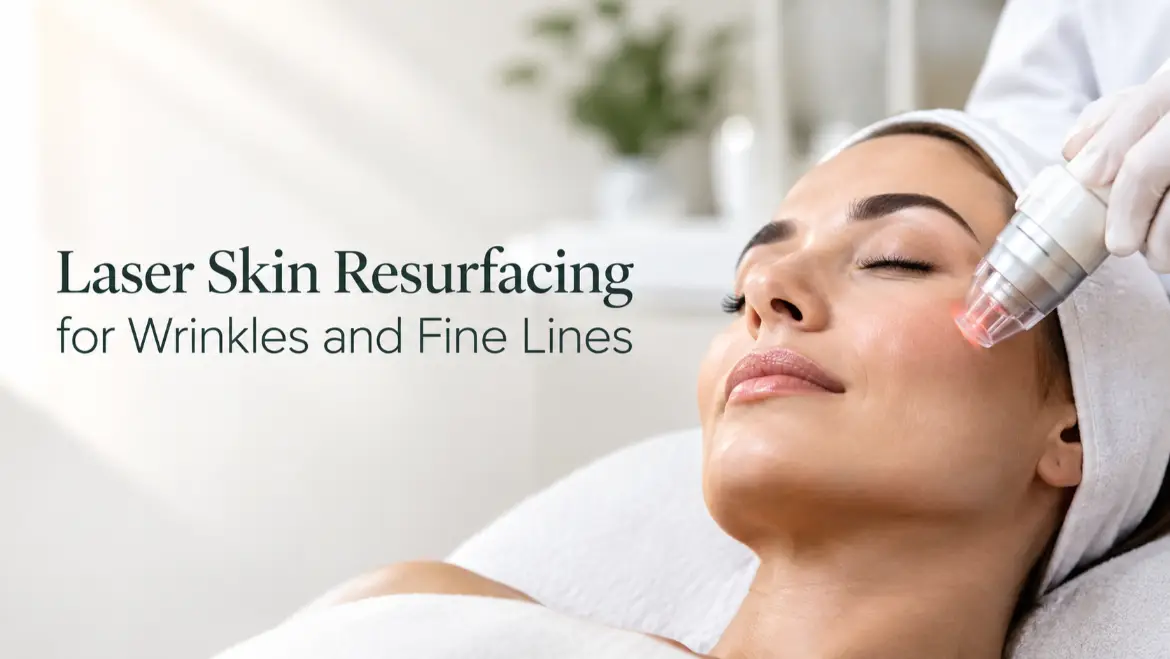
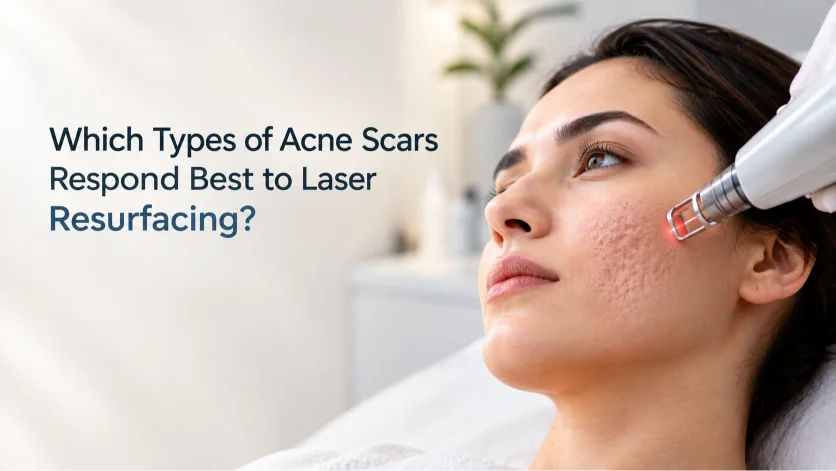
Laser resurfacing creates controlled treatment zones in the skin. The healing response encourages new collagen formation and remodeling, which can gradually soften uneven texture and reduce the visible depth of some scars.
Which Types of Acne Scars Respond Best to Laser Resurfacing?
Acne scars are not all the same. A treatment that works well for a shallow rolling scar may not produce the same improvement in a narrow, deep ice-pick scar.
A consultation should therefore start by identifying the scar pattern rather than simply choosing a laser.
Rolling Acne Scars
Rolling scars create broad, shallow depressions that give the skin a wavy or uneven appearance. Resurfacing treatments may help soften some of this texture by supporting collagen remodeling.Some rolling scars are also tethered below the skin. In those situations, a provider may recommend another procedure or combination approach instead of relying on laser treatment alone.
Boxcar Acne Scars
Boxcar scars have more defined edges and can be shallow or deep. Shallower boxcar scars may respond better to resurfacing than very deep scars.
Treatment choice depends on their depth, number, location, and how sharply the scar is attached to the surrounding tissue.
Ice-Pick Acne Scars
Ice-pick scars are narrow but extend more deeply into the skin. Because the opening is small and the scar is deep, surface resurfacing alone may not always provide enough correction.A provider may discuss a different treatment or a combined plan when these scars are present.
Are Dark Acne Marks the Same as Acne Scars?
No. A flat red, brown, gray, or darker mark left after acne may be post-inflammatory discoloration rather than a true scar.
AAD explains that post-inflammatory hyperpigmentation, or PIH, is not an acne scar and can fade over time. True depressed scars involve a structural change in the skin.This difference matters because pigment and textural scars may need very different treatment approaches.
What Types of Lasers Are Used for Acne Scars?
There is no single acne-scar laser. Providers may use different ablative or non-ablative fractional technologies depending on the scar pattern, skin tone, desired results, and acceptable downtime.
Fractional CO₂ and erbium-based lasers are among the technologies studied for atrophic acne scars. A September 2026 systematic review found a stronger response signal with fractional CO₂, but it also caused more treatment-related pain and longer recovery than erbium-based fractional lasers.The strongest treatment is not automatically the right treatment. The goal is to balance improvement, skin safety, and recovery.
How Much Improvement Can You Expect From Laser Acne Scar Treatment?
Laser resurfacing should be viewed as scar improvement rather than scar removal. Even a successful treatment cannot guarantee completely smooth, scar-free skin.A 2025 systematic review of fractional CO₂ laser studies reported that many participants experienced visible improvement, while temporary redness, swelling, and post-inflammatory pigmentation were among the reported side effects.
Your result can be different because acne scars rarely have one uniform depth or shape across the entire face.
How Many Laser Treatments Are Needed for Acne Scars?
There is no universal number of sessions. Some people may see meaningful improvement after a limited treatment series, while deeper or mixed scars may require several sessions or more than one type of procedure.AAD notes that acne-scar treatment is rarely a one-time process and that some patients need three or more treatments to achieve their best result.
Your provider should set expectations based on your individual scars rather than promising a fixed number before examining your skin.
When Will You See Results?
Laser resurfacing starts a healing and collagen-remodeling process rather than creating the final result immediately. Your skin may look red or swollen first, while textural improvement develops more gradually.
Collagen takes time to form and reorganize. This means the appearance of acne scars may continue changing after the visible surface has healed.
What Happens During Laser Skin Resurfacing?
Treatment begins with an evaluation of the skin, scar pattern, medical history, and treatment goals. The skin is prepared, and comfort measures may be used depending on the type and intensity of treatment.
The laser then delivers controlled energy to selected areas. Session length and treatment intensity vary based on the technology, treatment area, and individual plan.
Does Laser Resurfacing Hurt?
Comfort varies with the type of laser and treatment intensity. More aggressive resurfacing may cause greater discomfort than lighter fractional procedures.
Recent comparative research found fractional CO₂ treatment was associated with more procedural pain than erbium-based fractional lasers.Comfort options and what sensations to expect should be discussed before treatment.

What Is Recovery Like After Laser Resurfacing?
Recovery depends heavily on how aggressive the treatment is. Redness, swelling, sensitivity, and temporary changes in skin appearance can occur during healing.Stronger resurfacing generally means more downtime. In the 2026 comparison of fractional CO₂ and erbium-based lasers, CO₂ treatment was associated with longer recovery.
Ask specifically how long you should expect visible redness, peeling, or sensitivity before scheduling around work or important events.
What Are the Possible Side Effects?
Laser resurfacing can cause temporary reactions as the skin heals. More serious complications are less common but become more important when treatment selection or aftercare is inappropriate.
Potential concerns include:
- Redness and swelling
- Post-inflammatory pigment changes
- Infection or prolonged irritation
Laser treatment should therefore be selected according to the patient’s skin characteristics and performed with appropriate medical guidance.
Is Laser Resurfacing Safe for Darker Skin Tones?
People with darker skin tones can receive aesthetic treatments, but pigment changes need additional consideration. The risk depends on the laser, settings, skin type, treatment intensity, and provider experience.AAD warns that people with darker skin can develop persistent dark or light spots after improperly selected laser procedures. Professional assessment is particularly important before treatment.
Skin tone should influence treatment planning, not simply whether someone is told “yes” or “no” to laser treatment.
Can Laser Resurfacing Make Acne Scars Disappear Completely?
No. Laser treatment can soften the appearance of scars, but it does not erase them.AAD specifically advises that laser scar treatment can make scars less noticeable but cannot completely remove a scar.A realistic goal is smoother-looking texture and scars that draw less attention.
Does Laser Work Better for New or Old Acne Scars?
Both newer and older scars may be evaluated for treatment, but the most important factors are scar type, depth, skin condition, and whether active acne is controlled.Ongoing breakouts can create new scars while older scars are being treated. This is why controlling active acne should remain part of the overall plan.
AAD recommends continuing acne treatment when needed because preventing new breakouts also helps prevent new scars.
Should Active Acne Be Treated Before Laser Resurfacing?
Usually, controlling ongoing acne is an important part of scar management. Treating old scars while new inflammatory breakouts continue can become an endless cycle.A provider should evaluate both the existing scars and current acne activity. The best sequence depends on the type of acne and planned procedure.
Laser Resurfacing vs Microneedling for Acne Scars
Both treatments aim to encourage collagen remodeling, but they do so differently. Laser resurfacing uses focused energy, while microneedling creates controlled microchannels with fine needles.Current evidence does not show a simple universal winner. A 2026 systematic review comparing fractional CO₂ laser with needling-based treatments found no statistically significant difference in some pooled scar-reduction outcomes, while the studies themselves varied considerably.
Mission Wellness & Aesthetics currently lists SkinPen microneedling among its skin rejuvenation options, including treatment planning for acne scars.
Laser Resurfacing vs Chemical Peels for Acne Scars
Chemical peels work mainly by applying a controlled chemical solution to exfoliate selected layers of skin. Their usefulness depends on the type and depth of the scar as well as the strength of the peel.Laser resurfacing can reach different tissue depths and is generally considered for textural remodeling. Peels may be considered for texture, discoloration, active acne, or certain superficial concerns depending on the formula.
Mission Wellness also lists medical-grade chemical peels for acne and scar improvement, which makes them another option to discuss during treatment planning.
Which Is Better: Laser, Microneedling, or a Chemical Peel?
There is no single best treatment for every acne scar. Scar type matters more than choosing the most popular procedure.A patient with mixed rolling and boxcar scars may need a different strategy from someone who mainly has post-acne pigmentation. Some patients may also benefit from treatment combinations rather than one procedure used repeatedly.
A personalized evaluation helps match the treatment to what is actually visible in the skin.
Who May Be a Good Candidate for Laser Resurfacing?
Someone may be considered for laser resurfacing when acne scars create unwanted textural changes and the skin is suitable for the selected technology.
A provider will usually consider scar type, skin tone, current acne, health history, medications, previous procedures, and expectations before making a recommendation.The goal is not to fit every patient into the same laser protocol.
When Might Laser Not Be the Best First Choice?
Laser resurfacing may not be the first recommendation when another problem needs attention before scar remodeling begins.
For example, a different plan may be more appropriate when active acne is uncontrolled, the concern is mainly pigmentation rather than true scarring, or the scar type responds better to another technique.This is why identifying the problem correctly matters as much as choosing the treatment.
How Should You Prepare for Acne Scar Laser Treatment?
Preparation depends on the device, treatment intensity, skin type, and medical history. Follow the instructions given by the provider performing the procedure.Before treatment, make sure your provider knows about your current skincare products, medications, previous aesthetic procedures, history of pigmentation changes, and tendency to scar.
Do not copy another person’s pre-treatment routine because their laser settings and skin needs may be completely different.
How Should You Care for Your Skin After Treatment?
Freshly treated skin needs gentle care while its protective barrier recovers. Your exact instructions should come from the provider who performed the procedure.
Three priorities are usually important:
- Follow the prescribed cleansing and skincare instructions
- Protect healing skin from sun exposure
- Avoid picking, peeling, or irritating the treated area
AAD recommends careful aftercare and realistic expectations because collagen remodeling and final scar improvement take time.
Why Is Sun Protection So Important After Acne Scar Treatment?
UV exposure can irritate healing skin and contribute to unwanted pigment changes. Sun protection is particularly important when the skin is already inflamed or recovering from a procedure.AAD recommends broad-spectrum, water-resistant SPF 30 or higher as part of acne-prone skin care. Your provider may give more specific instructions following resurfacing.
Consistent sun protection also helps protect the appearance of your results.
Can Acne Scars Come Back After Laser Treatment?
The scar tissue that improves does not simply turn back into its original state, but new acne can create new scars.That means long-term results involve two separate goals: improving existing scars and preventing future inflammatory breakouts from causing additional damage.
Continue any recommended acne-management plan even after you begin scar treatments.
How Do You Choose the Right Acne Scar Treatment?
Start by identifying exactly what you want to improve. Someone concerned about deep pits needs a different conversation from someone mainly bothered by discoloration.
A good consultation should answer three questions:
- What type of acne scar do I have?
- Which treatment best matches that scar type?
- What improvement and downtime are realistic?
You should understand those answers before committing to a treatment series.
Acne Scar Treatment Options at Mission Wellness & Aesthetics
Mission Wellness & Aesthetics provides personalized aesthetic treatment planning rather than treating every texture concern the same way. Its current Hampstead services include laser skin rejuvenation, SkinPen microneedling, and medical-grade chemical peels that may be considered for different skin and texture concerns.
Because different acne scars respond differently, a consultation can help determine whether a laser-based approach, microneedling, a peel, or another plan makes the most sense for your skin.
Looking for Acne Scar Treatment in Hampstead, NC?
Mission Wellness & Aesthetics’ Hampstead location offers laser skin services with treatment planning based on individual skin concerns. The clinic is located at 17117 Hwy 17, Suite A, Hampstead, NC 28443.
Mission also has a Jacksonville location. Current laser-service information on the website centers the broader laser offering around Hampstead, so patients should confirm the specific treatment they are considering when scheduling.
Does Laser Skin Resurfacing for Acne Scars Work? The Bottom Line
Laser skin resurfacing can improve the appearance of certain acne scars, but the best results start with correctly identifying the scar. Rolling, boxcar, ice-pick scars, and post-acne dark marks are different problems and should not automatically receive the same treatment.
Mission Wellness & Aesthetics offers personalized skin treatment planning in Hampstead, including laser skin rejuvenation and other options that may be considered for acne-related texture. If acne scars are affecting how you feel about your skin, schedule a consultation to discuss what type of treatment and recovery plan fits your goals.