Finding a treatment for thinning hair can leave you unsure where to start. One product promises stronger strands. Another claims to help hair grow back. As you compare these options, you may notice peptides listed as an ingredient or offered as a treatment. That can leave you wondering whether peptide therapy for hair growth is worth considering and what evidence supports it.
A few small studies suggest some peptide products may help, but the evidence is limited and depends on the specific formula. To decide whether one is worth trying, look beyond the promise on the label. We’ll look at how peptides may help with thinning hair, what the research shows, and what to know before trying them.
What Are Peptides, and How Might They Affect Hair Growth?
Peptides are short chains of amino acids, which your body uses to make proteins. Some peptides also carry signals between cells. Researchers are studying whether certain peptides can affect the cells that help hair grow.
Each hair grows from a small structure in your skin called a follicle. Cells at its base help control hair growth. Scientists are looking at how these cells respond to different peptides, including copper peptides such as GHK-Cu and AHK-Cu.
Can Peptide Therapy Help With Hair Growth?
Some small studies have found improvements with specific peptide products. For example, a study of 22 men tested a lotion containing a peptide called GPIGS. After four months, the treated group showed an increase in the proportion of thick hairs compared with the placebo group. This finding applies to the lotion studied; it does not prove that every peptide treatment works.
When reading about results, check what improved. Did people have more hairs, thicker strands, or less scalp showing through? These changes are different, and a treatment may help with one without improving the others.
Why Is Your Hair Getting Thinner?
Hair can look thinner for several reasons, and more than one may be involved. When it started, where it shows, and how your scalp looks can help a clinician find the cause. Blood tests or other tests may be appropriate when your history and examination suggest a possible underlying problem. They are not automatically needed for everyone.
Gradual Pattern Hair Loss
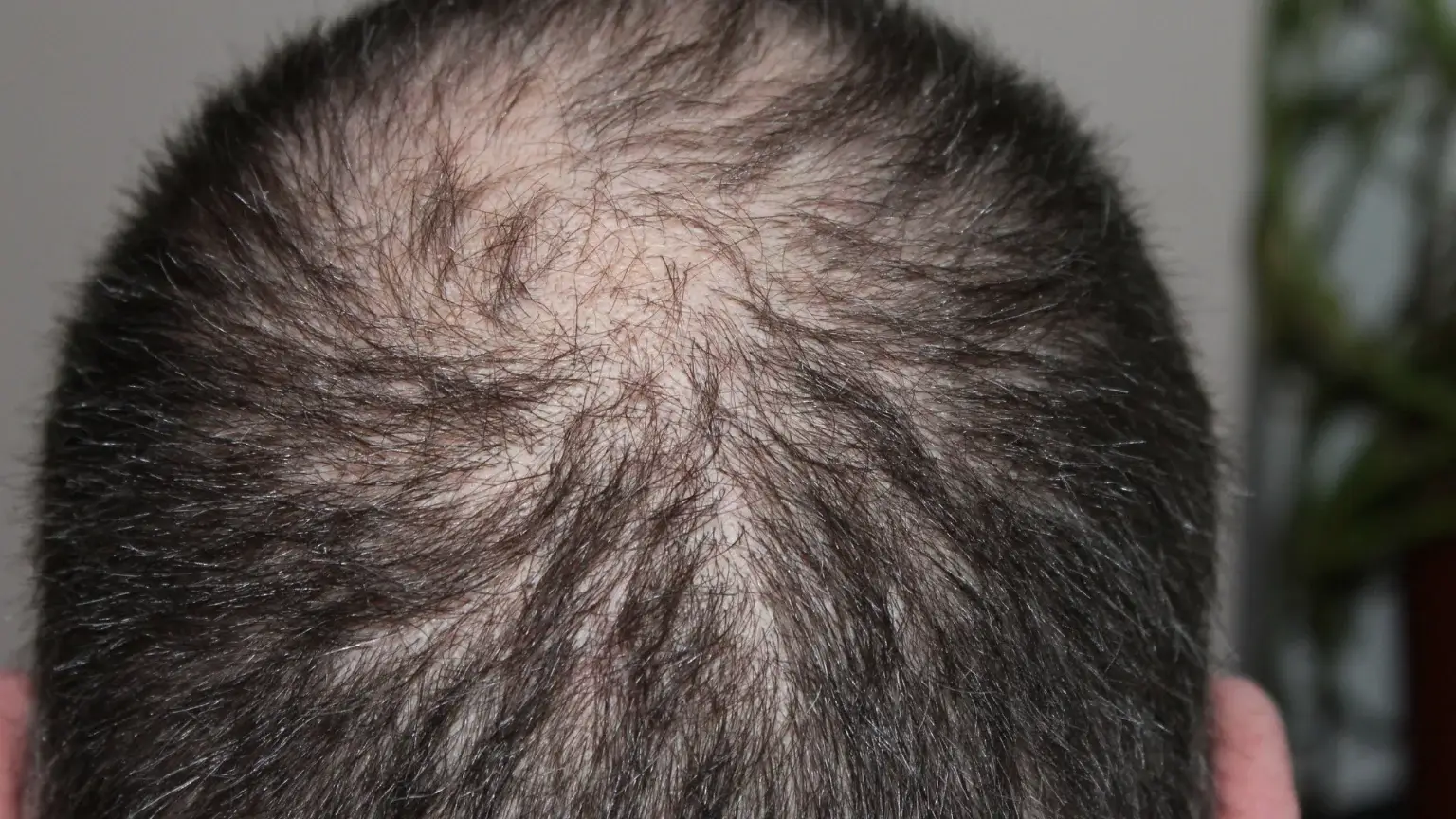
Pattern hair loss, also called androgenetic alopecia, usually develops gradually. You may notice a widening part, a thinning crown, or a receding hairline. Affected follicles can produce finer, shorter hair over time, making the scalp easier to see.
This can happen without a sudden increase in hair left in your brush. For example, your usual hairstyle may stop covering your crown as well, even though your routine hasn’t changed.
Shedding After Illness, Childbirth, or Another Change
Increased shedding can follow a major illness, surgery, childbirth, significant stress, or rapid weight loss. One possible explanation is telogen effluvium, when more hairs than usual move into the resting phase and later shed.
This shedding often starts two to three months after the trigger. Someone who notices extra shedding now may need to think back several months for a possible trigger. This differs from a hairline that has slowly changed over several years, although both problems can occur together.
Breakage and Scalp Problems
Sometimes, hair looks thinner because strands are breaking. Repeated heat, chemical processing, and rough handling can damage the hair shaft. Tight hairstyles can also place ongoing tension on follicles.
Short pieces of different lengths may suggest breakage, but appearance alone cannot confirm the cause. Pain, redness, scaling, or new bald patches deserve medical assessment. These signs may point to a scalp condition that needs treatment before you consider a cosmetic hair product.
What Does the Research Actually Show?
Research on peptides for hair growth includes lab experiments and small studies in people. Looking at these separately helps explain why an ingredient can sound promising without being ready for routine treatment. Here are two studies and what each adds to the picture.
Copper Peptides: Early Findings From the Lab
A study of AHK-Cu used human hair follicles kept alive outside the body, along with cells grown in a lab. At certain concentrations, the peptide helped follicles grow longer hair fibers. It also boosted the growth of cells involved in hair production. Researchers did not apply a scalp product to patients or test injections for hair loss.
You may see this study mentioned in discussions about GHK-Cu for hair growth. However, AHK-Cu and GHK-Cu are different copper peptides. Their similar names can make them easy to confuse, so check which one a study actually tested.
A GHK Combination Tested in Men With Pattern Hair Loss
Researchers studied 45 men with pattern hair loss for six months. They tested a product that mixed GHK with an ingredient called 5-ALA. Some men used a stronger version and some a weaker one. A third group used a product without either ingredient.
Hair counts increased in the groups using the GHK and 5-ALA mix. But their hair did not become clearly longer or thicker than the comparison group’s hair. The researchers suggested that the mix might be useful alongside other hair loss treatments.
The study did not test GHK on its own, so we cannot tell how much it helped. The product also contained no copper. That means these results do not show whether GHK-Cu injections help hair grow.
Questions These Studies Leave Open
Before choosing a product based on a study, look for answers to these questions:
| Question | Why it matters |
|---|---|
| Did researchers compare it with an established treatment? | Improvement over a placebo does not show how it compares with other options. |
| Were other treatments used at the same time? | They may have contributed to the change. |
| Did people keep their results after treatment ended? | A short study may not answer questions about lasting benefit. |
| Have other researchers found similar results? | Repeated findings give us more confidence than one small trial. |
For example, if someone starts a peptide serum and minoxidil together, fuller hair later would not show which product helped. A useful study needs a comparison that can separate those effects. These are the details to look for when a product is described as “clinically tested.”
Are Peptide Serums and Injections the Same?
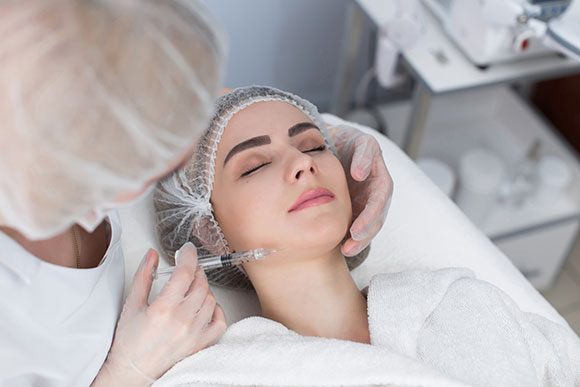
Peptide serums are applied to the scalp, while injections deliver a substance through a needle. This changes how the body is exposed to the ingredients and what safety questions need to be answered. An injection should not be treated as a stronger version of a serum.
Peptide Products Applied to the Scalp
A peptide hair serum may contain several ingredients, so read the full label before using one. Fragrance, preservatives, or other added ingredients may irritate your skin, even if the product is marketed as gentle. If you already use a medicated scalp treatment, ask your clinician before adding another product.
Follow the directions for that specific product. Applying more than recommended does not mean you will get better results. Stop using it and seek advice if you develop persistent redness, itching, or burning.
Injectable Peptides
Injectable products raise additional concerns about sterility, dose accuracy, and how the body may react. Compounded drugs are not FDA-approved; the FDA does not review their safety, effectiveness, or quality before they are marketed.
For compounded injectable GHK-Cu, the FDA has flagged a possible risk of immune reactions. The concern is linked to peptide clumping or impurities. The agency also notes that human safety data are limited. This warning is about injectable GHK-Cu, not topical copper-peptide products.
Which Peptides Might You See in Hair Products?
When shopping for peptides for hair growth, check the ingredient list as well as the product name. A “peptide” conditioner and a “multi-peptide” scalp serum may contain different ingredients and serve different purposes. The names below can help you understand what you’re looking at.
| Ingredient name | Where you may see it | What to know |
|---|---|---|
| Copper peptides, such as GHK-Cu | Some scalp serums and treatments | Check that the product is intended for scalp use. A copper-peptide facial serum is not automatically a hair treatment. |
| Collagen peptides or hydrolyzed collagen | Haircare products and oral supplements | “Hydrolyzed” means the protein has been broken into smaller pieces. Applying it to hair and taking it as a supplement are different uses. |
| Hydrolyzed keratin | Conditioners, masks, and treatments for damaged hair | This is broken-down keratin protein used in hair-conditioning formulas. It should not be confused with a treatment for thinning follicles. |
| Biotinoyl tripeptide-1 | Some leave-on scalp serums | It may appear alongside other peptides, caffeine, and plant extracts. Look at the full formula rather than judging the product by this ingredient alone. |
| Acetyl tetrapeptide-3 | Some multi-peptide scalp products | It can be included in a blend with several ingredients. “Multi-peptide” describes the formula; it does not tell you how effective it will be. |
For example, one scalp serum on the market combines biotinoyl tripeptide-1 and acetyl tetrapeptide-3 with caffeine and plant extracts. Because the formula combines several active ingredients, any results can’t be credited to the peptides alone.
You don’t need to memorize these names. Instead, check whether a product is meant for your scalp, your strands, or oral use. Scalp products are designed to act where hair grows. Products for the strands mostly improve how existing hair looks and feels. Knowing the difference helps you match the product to your concern.
How Should You Use Peptide Hair Products?
The right way to use a peptide hair product depends on its instructions. Some go on a dry scalp and stay there. Others are applied to wet hair and rinsed out. Before starting, check where to apply it, how much to use, and whether your hair should be wet or dry.
Applying a Peptide Scalp Serum
If your peptide hair serum is meant for the scalp, part your hair and apply it to the skin. Follow the label’s directions for spreading it and letting it dry. Avoid coating your hair lengths when the instructions call for scalp application.
Check whether it is a leave-on product before washing your hair. For example, applying a leave-on serum just before a shower could mean rinsing it away too soon. Choose a time that fits both the directions and your routine.
Using Shampoos, Conditioners, and Masks
Use a peptide shampoo as directed, then rinse it out. For conditioners and masks, check whether they go on your scalp or only on the mid-lengths and ends. Leave them on for the stated time.
A rinse-out conditioner and a scalp serum have different instructions. Don’t leave a rinse-out product on overnight or assume every peptide product needs daily use.
Considering an Oral Collagen Supplement
Before buying a supplement, check the serving size, protein source, and added ingredients. Collagen may come from sources such as fish or cattle, which can matter for allergies and dietary preferences.
Bring the label to your clinician or pharmacist if you take medicines or other supplements. They can help you check for overlapping ingredients and whether the product is suitable for you. A supplement serving is not an established dose of peptide therapy for hair growth. Taking more won’t speed up results.
What Should You Avoid When Trying Peptides for Hair Growth?
Keep your routine simple enough to tell what is helping and what is causing problems. These mistakes can make it harder to judge a new product:
- Starting several products at once. Introduce one new product at a time. If you change your shampoo, serum, and supplements together, you may struggle to identify what caused a change.
- Stopping prescribed treatment on your own. Talk with your prescriber before replacing a hair loss medicine with a peptide product.
- Using cosmetic serums during home microneedling. A product made for the skin’s surface is not automatically suitable for use on freshly needled skin.
- Buying products labeled “research use only” for personal treatment. These are not consumer haircare products. Do not use them for self-injection.
- Treating online photos as a promise. Lighting, styling, hair fibers, and camera angles can change how full someone’s hair looks. Photos alone cannot show what caused an improvement.
Are Peptides Better Than Other Hair Growth Treatments?
Peptides have not been shown to work better than established treatments such as topical minoxidil. If you’re comparing a peptide serum with minoxidil, the main difference is the strength of the evidence. Minoxidil has a longer history of human studies and is FDA-approved for certain types of pattern hair loss. Research on peptide products is much smaller and depends on the specific formula tested.
Some peptide haircare products are intended to improve how existing hair looks or feels. That can be useful, but it does not make them a replacement for a hair loss medicine. Not all peptides are cosmetic ingredients, though; some peptide-based medicines treat other health conditions.
The right hair thinning treatment depends on the cause and your medical history. If you already use minoxidil or another prescribed treatment, ask your clinician before changing your plan.
Common Myths About Peptides for Hair Growth
Some claims about peptides for hair growth can make choosing a product harder. Here are a few that deserve a closer look.
“A Higher Peptide Percentage Means Better Results”
A higher number on the label does not prove that a product works better. The percentage may describe a whole ingredient blend rather than the peptide alone. Ask what the number refers to and whether the finished product has been tested.
“Biotinoyl Tripeptide-1 Is the Same as Taking Biotin”
The similar names can be confusing. Biotinoyl tripeptide-1 is a peptide ingredient found in some scalp products. A biotin supplement is a vitamin product taken by mouth. They are different ingredients used in different ways, so claims about one should not be applied to the other.
“A More Expensive Serum Will Grow More Hair”
Price alone cannot tell you how well a peptide hair serum works. Packaging, branding, and other ingredients can all affect the cost. Look for clear product information and relevant research rather than treating a higher price as proof of better results.
“If a Product Is Sold Online, It Must Be Approved for Hair Loss”
Being available to buy does not mean a product has been approved to treat hair loss. Cosmetic products, supplements, and medicines follow different rules. A product advertised for fuller-looking hair should not automatically be treated as an approved hair loss medicine.
Talk About Hair Restoration at Mission Wellness & Aesthetics
If you’d like a clinician’s view on your thinning hair, our team can help. At Mission Wellness & Aesthetics, our hair restoration treatment combines microneedling with PRP.
Contact our Hampstead office to discuss an appointment. Bring details of when your thinning started and any treatments you’ve already tried. You’re welcome to ask about the procedure, expected recovery, and cost before deciding.
Call (910) 821-5055 or book an appointment online. You can also contact our team with questions.
Visit us: 17117 US-17, Suite A, Hampstead, NC 28443.